Queer Places:
Eton College, Windsor SL4 6DW, Regno Unito
University of Cambridge, 4 Mill Ln, Cambridge CB2 1RZ
Whittingehame Estate, Whittingehame Estate, Haddington EH41 4QA, United Kingdom
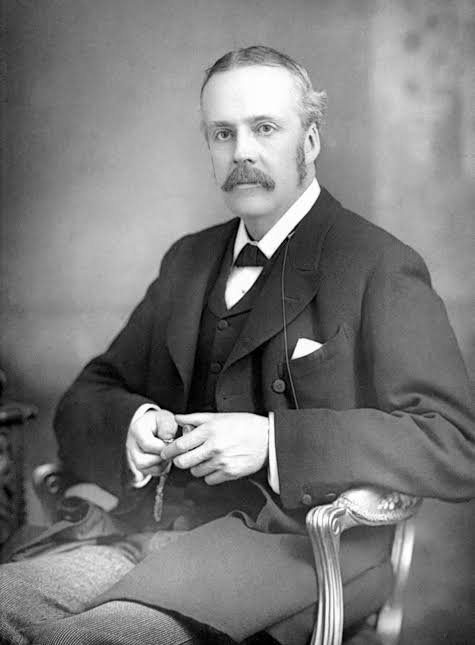 Arthur James Balfour, 1st Earl of Balfour (July 25, 1848 – March 19, 1930), was a prominent British Conservative statesman, philosopher, and prime minister. Best known on
the global stage for issuing the Balfour Declaration of 1917 during his tenure as Foreign Secretary, Balfour’s personal life, intellectual associations, and refusal to
conform to Victorian marital expectations have long made him a subject of historical and biographical intrigue.
Arthur James Balfour, 1st Earl of Balfour (July 25, 1848 – March 19, 1930), was a prominent British Conservative statesman, philosopher, and prime minister. Best known on
the global stage for issuing the Balfour Declaration of 1917 during his tenure as Foreign Secretary, Balfour’s personal life, intellectual associations, and refusal to
conform to Victorian marital expectations have long made him a subject of historical and biographical intrigue.
Born in East Lothian, Scotland, to an affluent aristocratic family, Balfour was the nephew of the 3rd Marquess of Salisbury (who would later become his political mentor
and prime minister). Balfour was educated at Eton College, where he studied under the highly influential master
William Johnson Cory—a brilliant classicist and poet who was later forced to resign from Eton due to his romantic
attachments to young men.
Balfour then went up to Trinity College, Cambridge, where he read moral sciences from 1866 to 1869.
While at Cambridge, Balfour was inducted into the Cambridge Apostles. Founded in 1820, this elite, highly secretive
intellectual club served as a incubator for radical ideas, philosophical skepticism, and tolerance.
Unlike later, famously vocal generations of Apostles (such as Lytton Strachey or
John Maynard Keynes), Balfour was characterized by contemporaries as a relatively "silent member".
Instead of using the university's traditional debate chambers like the Cambridge Union to launch a political career, Balfour preferred presiding over an intimate,
intensely philosophical circle in his rooms at Trinity. This group cultivated a shared detachment from traditional party politics and an emphasis on aesthetic and
philosophical reflection.
Balfour lived his entire life as a bachelor, a choice that generated significant speculation in the rigid social climate of Late-Victorian and Edwardian Britain. His life
intersects with early LGBTQ history through political weaponization, intellectual circles, and contemporary rumors.
In his mid-twenties, Balfour was loosely linked to a young woman named May Lyttleton. She died tragically of typhus in 1875, and Balfour famously requested that an
emerald ring be buried with her. While family members claimed this heartbreak explained his lifelong bachelorhood, modern historians note that Lyttleton’s own extensive
diaries show little evidence that she was in love with Balfour. Biographers suggest that Balfour may have intentionally kept the tragic narrative alive as a convenient
social shield to explain away his persistent lack of interest in marriage.
During his highly contentious tenure as the Chief Secretary for Ireland (1887–1891), Balfour was targeted with vicious, thinly veiled homophobic smear campaigns by
political opponents. Irish Nationalists and certain progressive critics sought to weaponize his refined aesthetic tastes, elegant mannerisms, and single status, painting him
as effeminate and unmanly to undermine his political authority.
In middle age, Balfour became a central figure of "The Souls," an elite, avant-garde social and intellectual salon of the late-Victorian aristocracy. The group openly
flouted conventional bourgeois morality, valuing intellectual companionship between men and women. Within this circle, Balfour maintained a close, emotionally complex
40-year relationship with Mary Charteris (Lady Elcho).
Because of his aloof, detached demeanor, rumors about his physical nature persisted throughout his life; famously, political figure Lord Beaverbrook once wildly claimed
that Balfour was a "hermaphrodite". Most mainstream biographers conclude that Balfour likely possessed a low sex drive or preferred emotional and intellectual intimacy over
physical relationships. However, LGBTQ links remained close to his family circle; his younger brother, Gerald Balfour, was noted
within Cambridge archival records to have had an intimate liaison with the Apostle John Maynard Keynes.
References:
- https://en.wikipedia.org/wiki/Arthur_Balfour
- https://www.gov.uk/government/history/past-prime-ministers/arthur-james-balfour
- https://www.ebsco.com/research-starters/history/arthur-balfour
Support this project
This website is a passion project researched, developed, and funded entirely by me. If you find the content valuable and would like to help support the ongoing research and hosting costs, any contribution is deeply appreciated.
Thank you for keeping this independent resource alive!
My books on Amazon: Elisa Rolle's books
BACK TO HOME PAGE